Thursday, 14 February 2013

The Actual Ruby Bridge

When casting my main character I was very fortunate that was one of my friends offered to be and even more lucky when I realised she was perfect and match who imagined to play her.


In this photo the actress is wearing her own that she chose under suggests that I gave to what I wanted the character to look like. I let her pick the outfit because Ruby herself is very comfortable in her clothes and I felt that if I picked out an outfit of my own then she may not be as relaxed. Ruby's clothes act as a safety barrier to the broken girl hidden behind.

Sunday, 3 February 2013

Ten Story Types: Romance

From the book 'From Stories To Themes' that looks at ten story types, I have identified that my film opening and plot will run along the idea of The Romance.
This is when:


  • A Character is seen to be emotionally lacking/missing something/someone. - In my story, Ruby is shown to have a false ego.
  • Something/someone is seen by the Character as a potential solution to this problem. - When a boy (thought to be an Ex) from Ruby's past turns up in place far from where they grew up/last been together, Ruby is scared to let her real personality shine through, however, he is able to break this false character that she holds and allows her to let go of bad memories.
  • Barriers exist to the Character achieving a resolution with the object of desire. - Her stubborn personality and past experiences with her ex disallow her to explore her reasons for her false personality.
  • The Character struggles to overcome these barriers. - Later on, Ruby's friends will try advise her that he is bad for her and make her try to hate him more, even though he is trying to make her see his change.
  • The Character succeeds in overcoming some, if not all, of the barriers. - Ruby realises that her friends are partially to blame for her false character and can let her true self free with her ex.
  • The story is complete when the Character is seen to have resolved their emotional problem and unites with the object of desire. - Ruby is able to put her past behind her and dates her ex again. With her old personality gone and no more demons around every corner, she can live her life as peacefully as life can be.

Saturday, 26 January 2013

Character - Ruby Bridge

Ruby Bridge is an opinionated twenty year old from London. She currently works in a small boutique on the high street of a quaint town in the county of Norfolk. Growing up, she always aspired to live in a rural town compared to her powerful, murky urban landscape that created her hardshell personality.

DOB: 5th May 1992 (20 years old)
House Type: Rents a 1 Bedroom Flat
Appearance: Long wavy brunette hair. Blue Eyes. 5ft 10in
Favourite colour: Purple - represents royalty and vunerablility
Favourite TV show: Animal Planet (Big Animal lover)(Hates reality tv!)
Favourite place to shop: TopShop
Relationship Status: Single (Not interested in having relationship yet, insists she is happiest alone)
Siblings: Sam Bridge (25 years old)
Relationship with parents: Stable, but distant
Qualifications: 3 B grade A-Levels
Electoral preference: Labour

Loves:


 Hates:


Wednesday, 23 January 2013

Developing a Character

Characterisation VS Character

Characterisation is the total of qualities observed by a human. All knowledge gained goes through scrutiny: age, sex, home life, attire, values, sexuality and speech style. Each trait makes a character unique. However, beneath characterisation, regardless of knowledge we think we know, there is another heart to them.

"True character is revealed in the choices a human being makes under pressure - the greater the pressure, the deeper the revelation, the truer the choice to the character's essential nature" - Quote from Story by Robert McKee.

Is the character's true personality loving or cruel? Truthful or deceitful? Strong or weak?
Pressure made is essential to see what the character to chooses to do. If they tell the truth in a situation where a lie would gain nothing, then the truth is trivial, however, if the truth is told when a lie could save a life then we sense that he has an honest nature.

Character Revelation

Good storytelling relies on the contradiction of the revelation of the true character. If the introduction to a character has not changed by the end of the story then the audience will be disappointed. For example - a loving wife who does not express secrets, unfulfilled dreams or hidden passions will be very boring. The revelation of a characters true nature is fundamental in major roles, but in minor roles this is not necessary, however the principal of a hidden personality should still be expressed.

Character Arc

"Taking the principle further yet: The finest writing not only reveals true characters, arcs or changes that inner nature, for better or worse, over the course of the telling."

A story will have points that spread over time, each point is the evolution and revelation of the true character. For example at A we are introduced to a character and gain knowledge at the next points. By point Z, the climax of the story, we see the transition that pressure has turned the character into, this will most likely be the true nature of the character.

Structure and Character Functions

Structure is to provide building pressures that force characters into difficult dilemmas where they must make risk taking decisions, which then ends up revealing their true natures, even if unconscious to them.
The function of character is to bring the story to life through characterisation. It has to be credible, so that the audience believes every move the character makes.

Climax and Character

"Movies are about the last 20 minutes" says a Hollywood axiom. What they are saying is that the climax of the film must be satisfying for all.
A finished screenplay represents 100% of the authors creative labour, 75% of this has gone into the climax of the last act.  If this scene fails, then the whole film fails. Until its creation there is no story.

Sunday, 20 January 2013

Mise en Scene

Mise en Scene has 5 elements:

  • Settings & Props
  • Costume, Hair & Makeup
  • Facial Expressions & Body Language
  • Lighting & Colour
  • Positioning of Characters/Objects Within the Frame
When watching a RomCom/Chickflick the lighting is often bright and clean symbolising the freedom and happiness of the shot. I have the idea for my opening sequence that the light should be limited, this can be done with a block by a blind. As the scene progresses I want more light to be added as Ruby searches the room - I plan to do this by opening more of the blind as the scene goes on.

Ruby herself needs to have style that is in fashion, however is also a little quirky to represent her personality. I want her make-up and hair to be very simple and not extravagant because naturally her personality will be quiet, but she will hide this by an alter ego who is loud and obnoxious, although this will be to do with experiences from her past.

Positioning of the characters will be mainly centre screen, however the rule of thirds will be used to show items such as the purple scarf or objects that are foreshadowed in the next scenes

Monday, 14 January 2013

Audience Profile

Name: Amy

Age: 21

Occupation: Shop Assistant at River Island


House Type: Apartment in London (lives with Best Friend)


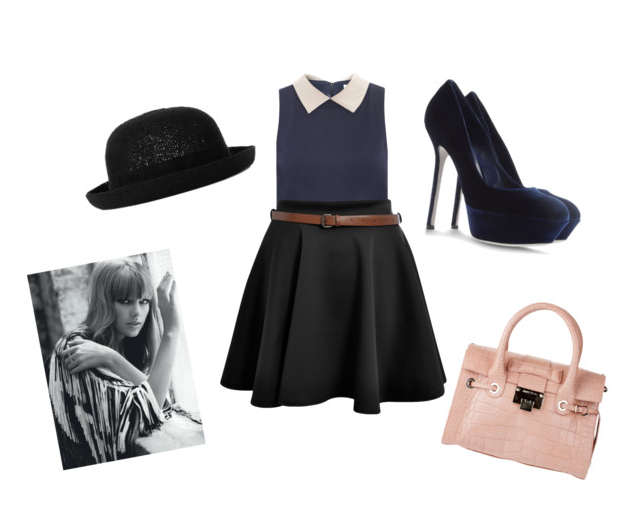
<--- Favourite Outfit

Favourite TV Show: X Factor (or other reality tv shows)

Favourite Meal: Caesar salad

Relationship Status: Newly Single

Dream Holiday Location: New York


Description of Herself:
Amy would describe herself as bubbly and confident within thoughts. She likes to have fun, however is very conscious that work is more important sometimes.

Sunday, 13 January 2013

Audience

When making a film you have to know your target audience. For a Chickflick, the clue is in the the name, the target audience is mostly going to be female aged between late teens to mid-thirties. This is because Chickflicks normally deal with feminine points of view/situations that are based around the early years of freedom with adults.

ABC1 Scale

This scale is the UK's traditional was to categorise 'social grades' based upon occupations.

A          Higher Managerial, Administrative, Professional

Lawyers, Doctors, Scientists, Managers of Large Scale Organisations

B          Intermediate Managerial, Administrative, Professional

Shopkeepers, Farmers, Teachers, White-collared Workers

C1        Supervisory or Clerical and Junior Managerial, Administrative and Professional

Skilled Manual Workers - High Grade e.g Master Builders, Carpenter, Shop Assistants, Nurses

C2       Skilled Manual

Low Grade Manual Workers e.g Electricians, Plumbers

D        Semi-Skilled Manual

Bus Drivers, Lorry Drivers

E        Casual Labourers, State Pensioners, the Unemployed


From this scale I would say that my target audience is either C1 or E. C1 will be looking to escape, so will use a light heartened film as escapism. E will also enjoy the light heartedness for entertainment.

Core Audiences

Mainstream Only - Clear genre focus. Emphasis on 'big films' or blockbusters. E.g Lord of the Rings, Star Wars, The Matrix

Mainstream Plus - Satisfied by a mainstream film, but could also delve into watch a specialised film. E.g The Secretary, The Queen, Lost in Translation

Aficionados - Like to portray themselves as more specialised film goers, but still see Hollywood films. Also likely to watch foreign films. E.g Volver and Amelie

Buffs - Express a liking for non fit genre films. E.g Lovers of the Arctic Circle


From core audiences, my film will be more popular with Mainstream Only and Mainstream Plus audiences because it will have a fit genre and will not be an independent, specialised film.